Organic hazelnuts: what organic certification really means
The EU organic leaf, control bodies, conversion period and traceability: what lies behind the organic label and what to check when sourcing organic ingredients.
In the European Union, the word “organic” on food is not a marketing adjective but a term protected by law. It may only be used by operators who work according to the rules of organic production and are inspected regularly by an authorised control body. This applies to the entire chain: the hazelnut grower, the processor and the customer who turns organic hazelnuts into an organic product of their own.
A third of the hazelnuts we process are organic, and that share is growing. In this article we explain what certification means in practice and what you should check if you buy organic ingredients for your own production.
The legal framework: Regulation (EU) 2018/848
The core legislation is Regulation (EU) 2018/848 on organic production and the labelling of organic products, which has applied since 1 January 2022 and replaced the earlier Regulation (EC) No 834/2007. It is supplemented by implementing and delegated acts and by national rules governing controls. The rules are the same in every member state, so organic hazelnuts from Croatia and organic raw material from another EU country are subject to the same requirements.
For hazelnuts this means, among other things: no synthetic pesticides or mineral fertilisers, except for substances expressly authorised for organic production; no genetically modified organisms; soil fertility maintained through crop rotation, organic fertilisation and cover crops; and plant protection based primarily on preventive measures.
The conversion period: why an orchard does not become organic overnight
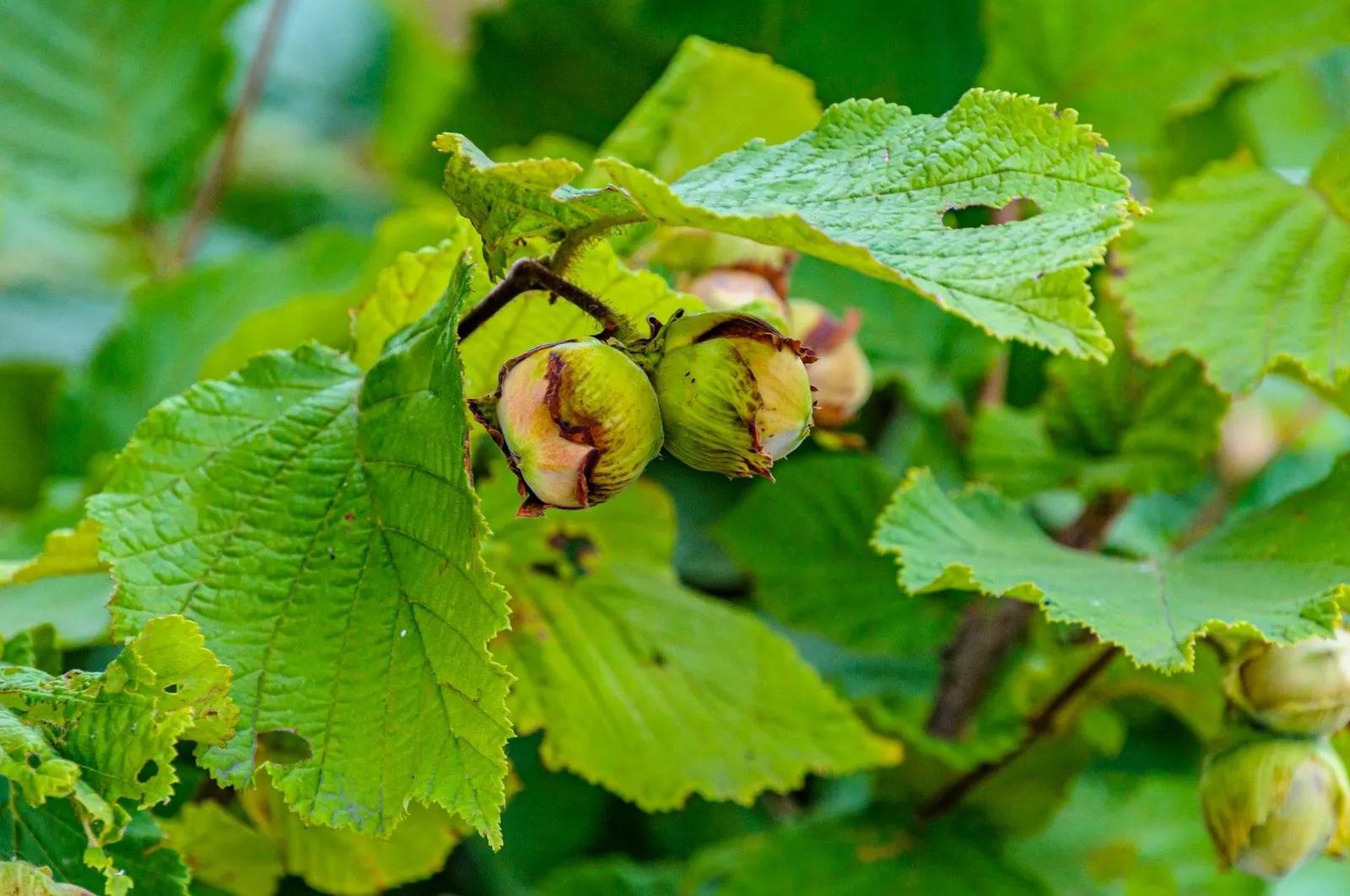
A grower converting a conventional orchard to organic production goes through a conversion period. For perennial crops, and hazelnut is one, this generally lasts three years before the first harvest that may be sold as organic. During that time the grower already follows all the rules and is under inspection, but the crop may not yet carry the organic label.
This is one of the reasons why the supply of organic hazelnuts cannot quickly keep pace with demand: a decision a grower takes today yields a certified crop only after several seasons.
Inspection and the certificate
Organic production is not supervised by the state directly on every farm but by authorised control bodies, which are approved and overseen by the competent authority, in Croatia the ministry responsible for agriculture. The control body inspects each operator, as a rule at least once a year, and may carry out unannounced visits and take samples. Records, purchases, storage, production processes and traceability are all checked.
Certification is not just for farmers. Processors must be certified too: on site, organic and conventional raw materials must be kept apart in space or in time, lines are cleaned before organic batches, and every batch must be traceable to its incoming lots. That is why our organic hazelnut kernels and other organic products are labelled separately and handled apart from conventional ones.
What is permitted in processing
The rules for organic processing are based on the principle that the product should retain the characteristics of the raw material. Mechanical and thermal processes such as drying, cracking, roasting, chopping and milling are permitted. Ionising radiation is not, and additives and processing aids may only be used if they appear on the list of substances authorised for organic production, and only where they are technologically necessary.
For hazelnuts, this means in practice that most forms can be produced without any additions at all. Organic hazelnut paste contains nothing but roasted organic hazelnuts, making it a straightforward ingredient for your own organic recipe: there are no further ingredients whose origin has to be documented separately.
The EU organic leaf and what goes with it
The EU organic logo, stars forming a leaf on a green background, is mandatory on pre-packaged organic food produced in the EU. It must be accompanied by the code of the control body, which in Croatia takes the form HR-EKO-xx, and an indication of where the agricultural raw materials were farmed, for example “EU Agriculture” or the name of a country if all the raw materials come from there.
If you make an organic product yourself, the rule is that at least 95% of the agricultural ingredients by weight must be organic. That means the hazelnuts in your cake, cream or spread must also be certified, and you must be able to prove it.
The organic label does not only describe how a hazelnut was grown, but also that every link in the chain can prove it.
What to check when buying organic ingredients
A valid supplier certificate and the list of products it covers. A certificate for raw hazelnuts does not automatically cover roasted or chopped goods.
Labelling on the delivery note and invoice. The documents must make clear that the goods are organic and show the control body code.
A batch number on every pack, so that you can link it to your own batches.
Your own storage. If you keep conventional and organic hazelnuts in the same room, label and separate them, because the control body will ask you, too, which goods are where.
Demand for organic ingredients is growing because more and more manufacturers are launching organic lines, and they cannot use conventional ingredients for them. Alongside kernels we offer organic roasted chopped hazelnuts and organic paste, and we will send our certificate and product list on request.
We only use necessary cookies that the shop needs to work. Cookie policy
We only use necessary cookies and browser storage, without which the shop does not work: your basket, login, the chosen language and remembering this notice. We do not use analytics or marketing cookies. Cookie policy