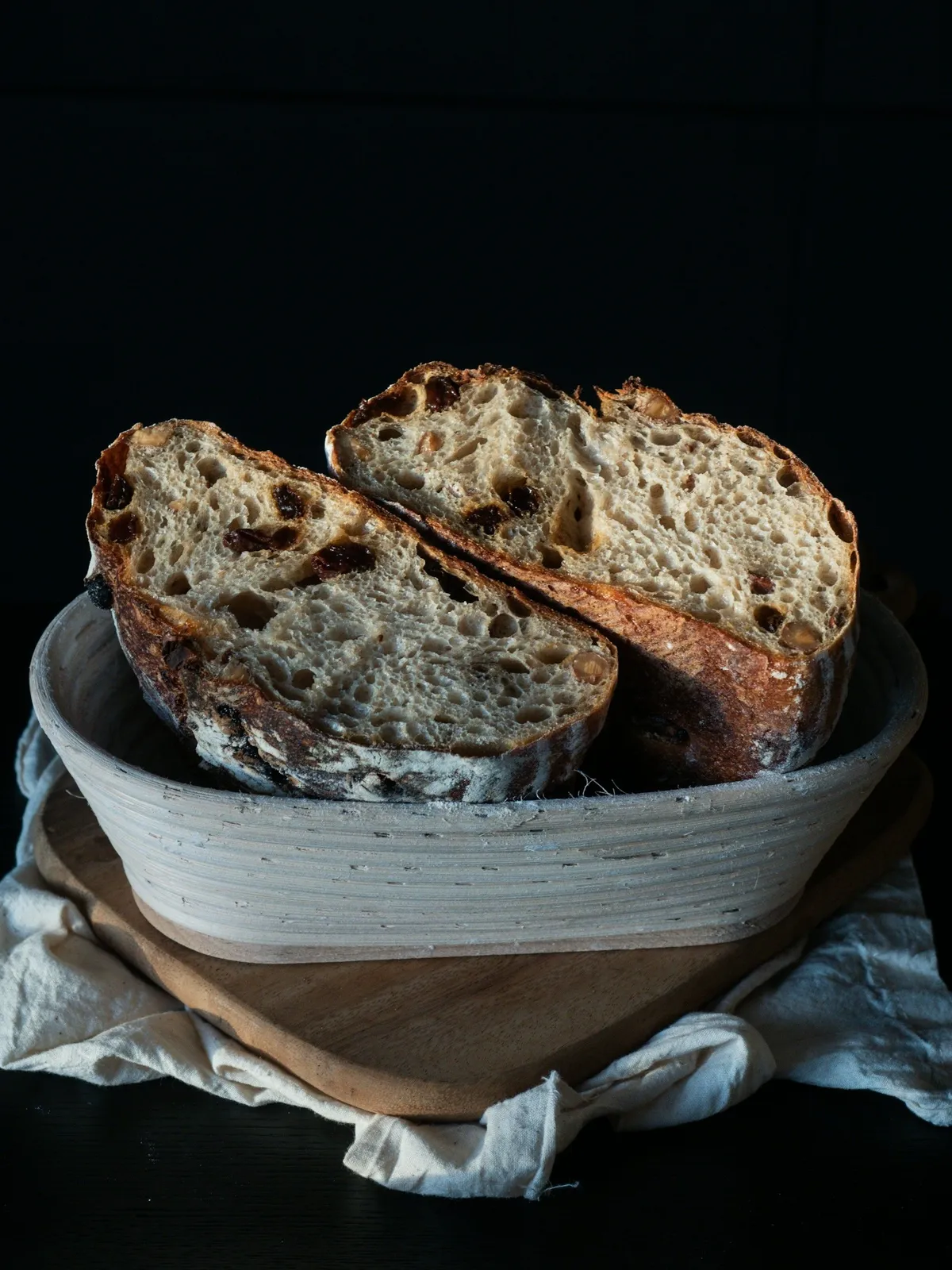
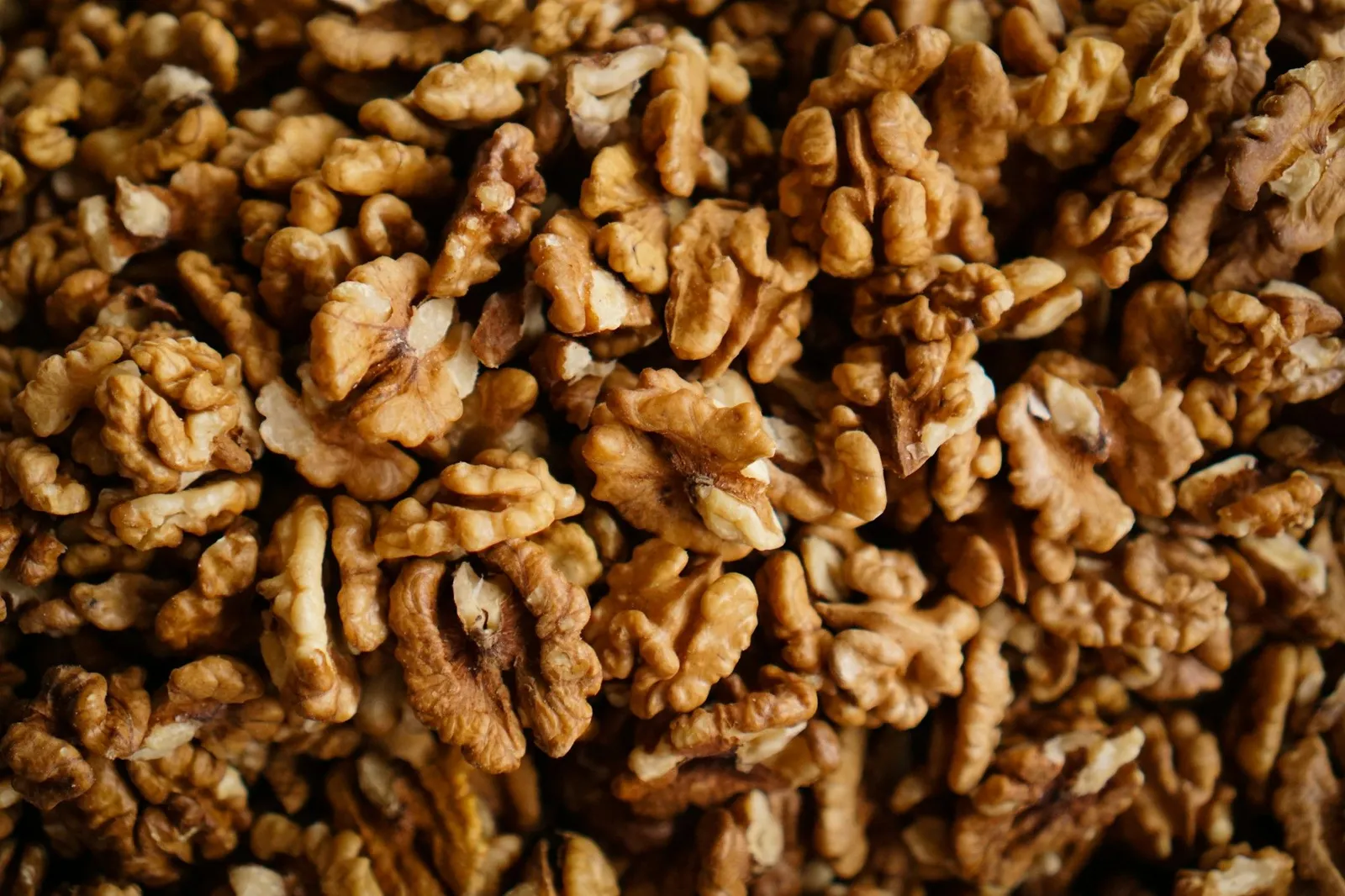
Walnuts are an essential part of any bakery: from nut rolls and Christmas cakes to walnut bread, biscuits and pastries. Yet walnuts are also the nut that most often causes problems in the workshop: a bitter filling, rancidity after a few weeks in storage, or a greyish-purple crumb in bread.
In this guide we explain which walnut form to choose for which application, where bitterness comes from, and what you can do to make sure the walnut in the finished product tastes fresh and full-flavoured.
Walnut halves are the choice when the walnut has to be visible and attractive: for decorating cakes and tarts, on top of pastries, for caramelised walnuts, and in products where the whole kernel conveys quality. Halves are light-coloured and uniform, and the price reflects the fact that they have been kept whole. For a filling or dough in which the walnut is broken down anyway, halves are an unnecessary expense.
Walnut pieces are fragments of kernel produced when the shells are cracked. They taste no different from halves but are more economical, making them the natural choice for walnut bread, strudels, muffins, granola and any filling that is ground. With pieces it is worth checking that the size is uniform and that there is no fine dust or shell residue, since the small particles are the first to go rancid.
Chopped walnuts save labour in the workshop. A 2–4 mm granulation suits biscuits, pastry toppings and mixing into doughs, while 0–2 mm works for fine fillings, coatings and doughs in which the walnut must be evenly distributed. A classic walnut roll uses ground walnuts; the 0–2 mm granulation comes closest to that, and if you want a completely smooth filling, grind walnut pieces just before preparation.
Walnut bitterness has two main sources. The first is the skin, the thin pellicle on the kernel, which contains tannins. On a fresh, light-coloured walnut it tastes mild, but a darker kernel generally also has a more pronounced, astringent skin. Kernel colour is therefore not just a matter of appearance: a light kernel usually means a milder flavour, too.
In international trade, walnut kernels are also graded by colour, from extra light to amber, and the lighter grades cost more. For decoration and light-coloured creams it is worth asking for lighter kernels; in a dark dough, bread or a filling with cocoa the difference in colour is barely visible, so a darker grade is a sensible choice, provided the flavour is fresh.
The second and more common source is oxidation. Walnuts are high in polyunsaturated fatty acids, which oxidise faster than the fats in hazelnuts or almonds. A rancid walnut has a bitter, sharp taste and a smell reminiscent of paint or old oil, and baking does not remove it; in a filling it becomes even stronger. If a walnut already leaves a bitter aftertaste when you sample it, no process will rescue it in the finished product.
Because of its delicate fats, the walnut needs stricter storage conditions than most other nuts. Keep it in sealed packaging in a cool, dry, dark place, away from heat sources and strong odours, which the kernel readily absorbs. Chilled storage is suitable for longer periods; when you take a pack out of the cold room, leave it closed until it reaches room temperature so that no moisture condenses on the kernels. The best-before date is stated on the label.
The same goes for the finished filling: a prepared walnut filling with milk and sugar is perishable and should not be kept longer than your HACCP plan and chilling conditions allow. It is better to prepare it in quantities for one or two shifts than in advance for the whole week.
Walnuts are tree nuts and an allergen that must be emphasised in the list of ingredients under Regulation (EU) No 1169/2011. For bakery products that combine several kinds of nut, see our other categories too, such as hazelnuts.