Peanut paste: what 100 % means, what the additives do and how to use it in production
Pure peanut paste versus spreads with additives, why the oil separates, how to dose it in production and what the rules require on allergens.
On supermarket shelves peanut butter is a spread, but in production peanut paste is a raw material, and its properties vary considerably depending on what else it contains. For a bakery, a confectioner or an ice-cream maker, the difference between 100 % peanut paste and a paste with additives is not a matter of taste but of formulation, labelling and process behaviour.
Here we explain how pure paste is made, what the usual additives do, how the paste behaves in production and what to watch for regarding allergens.
How 100 % peanut paste is made
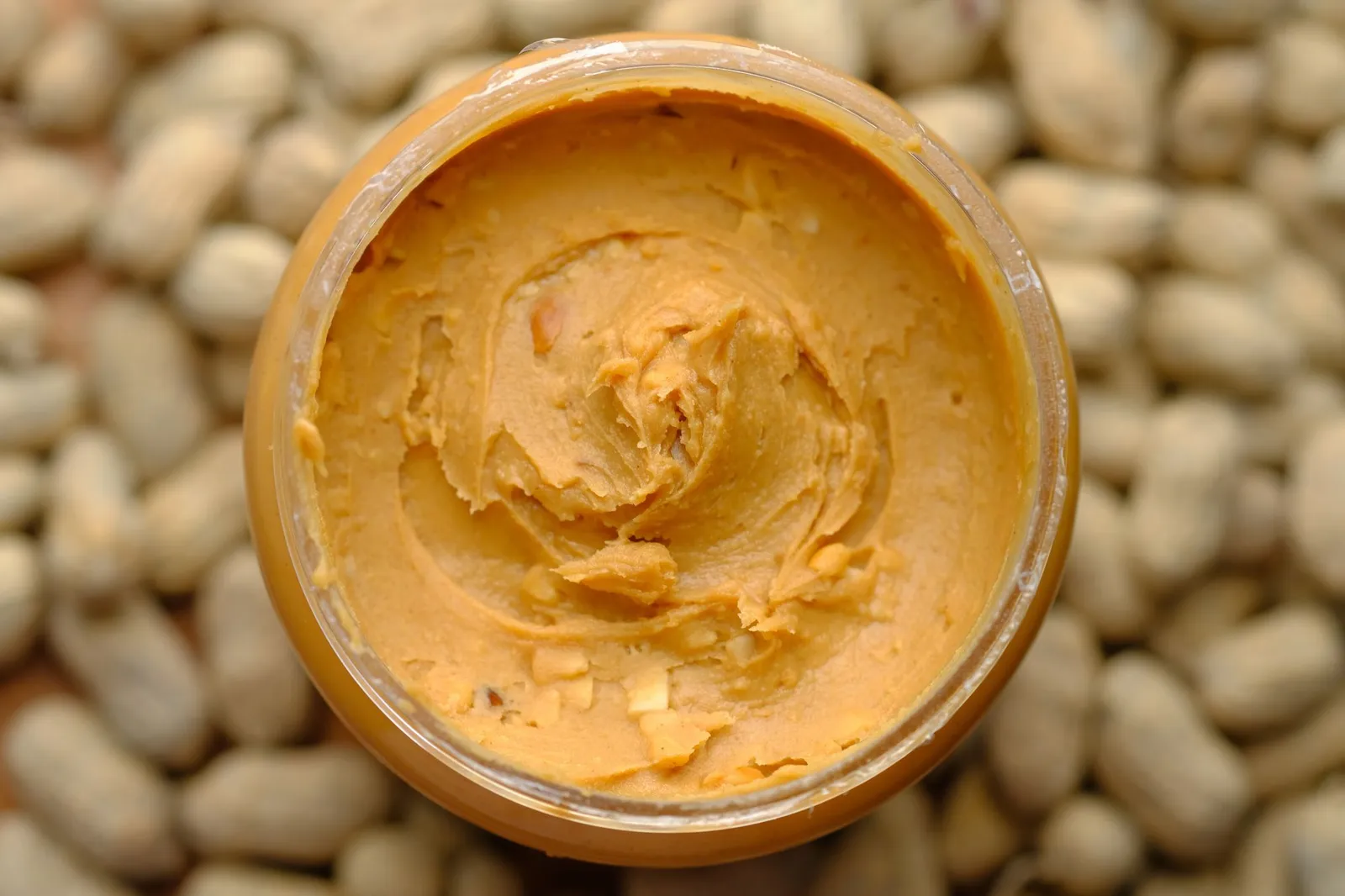
The starting point is roasted peanuts. After roasting, the kernels are cooled, the reddish skins and germs are removed, and the nuts are ground, usually in two stages: coarse, then fine. Peanuts consist of roughly half fat, so grinding breaks open the cells, the oil is released and the dry mass turns into a thick, flowing paste. Nothing is added: flavour, colour and aroma come solely from the raw material and the degree of roast.
That is precisely why the degree of roast is decisive for paste quality. A lighter roast gives a milder, nuttier flavour and a lighter colour; a darker roast a more pronounced, almost caramel-like aroma, but also a greater risk of bitterness. The fineness of grinding determines mouthfeel: a very fine paste is smooth and creamy, a coarser one leaves a graininess that some products actually call for.
Oil separating on the surface is not a defect but proof that the paste contains nothing but peanuts.
Pastes with additives: what is added and why
Commercial spreads usually contain salt and sugar for flavour, plus a vegetable fat (often palm or partially hydrogenated) as a stabiliser to stop the oil separating. Emulsifiers, flavoured oils or syrup are sometimes added as well. For consumers the result is convenient: the spread is uniform, spreadable and needs no stirring.
For manufacturers these additives are often a burden. Salt and sugar enter the recipe balance and restrict use in savoury or unsweetened products. Added fat changes the melting point and texture: in a cream it can give a waxy mouthfeel, in a chocolate mass it can affect crystallisation. And every additional ingredient has to appear on the label of the finished product, which gets in the way of the short, “clean” ingredient list that buyers increasingly ask for.
When buying, therefore, read the ingredient list first, not just the product name. If peanuts are the only ingredient, the paste is pure; every additional ingredient needs to be assessed against your own recipe and against how the label of your finished product will look.
Working with pure paste in production
In a paste without stabilisers, oil rises to the surface during storage and a denser mass remains underneath. Before dosing, the whole container must be homogenised, not just scooped from the top: if only the upper part is used, the first batches will be too oily and the last ones dry and hard. Larger plants handle this with a mixer or by briefly warming the container; in smaller workshops thorough stirring before each withdrawal is enough.
Viscosity depends strongly on temperature. Cold paste is thick and hard to dose; warm paste flows and blends easily with other ingredients. If you standardise the recipe, standardise the paste temperature at dosing as well, or the texture of the finished product will vary from batch to batch.
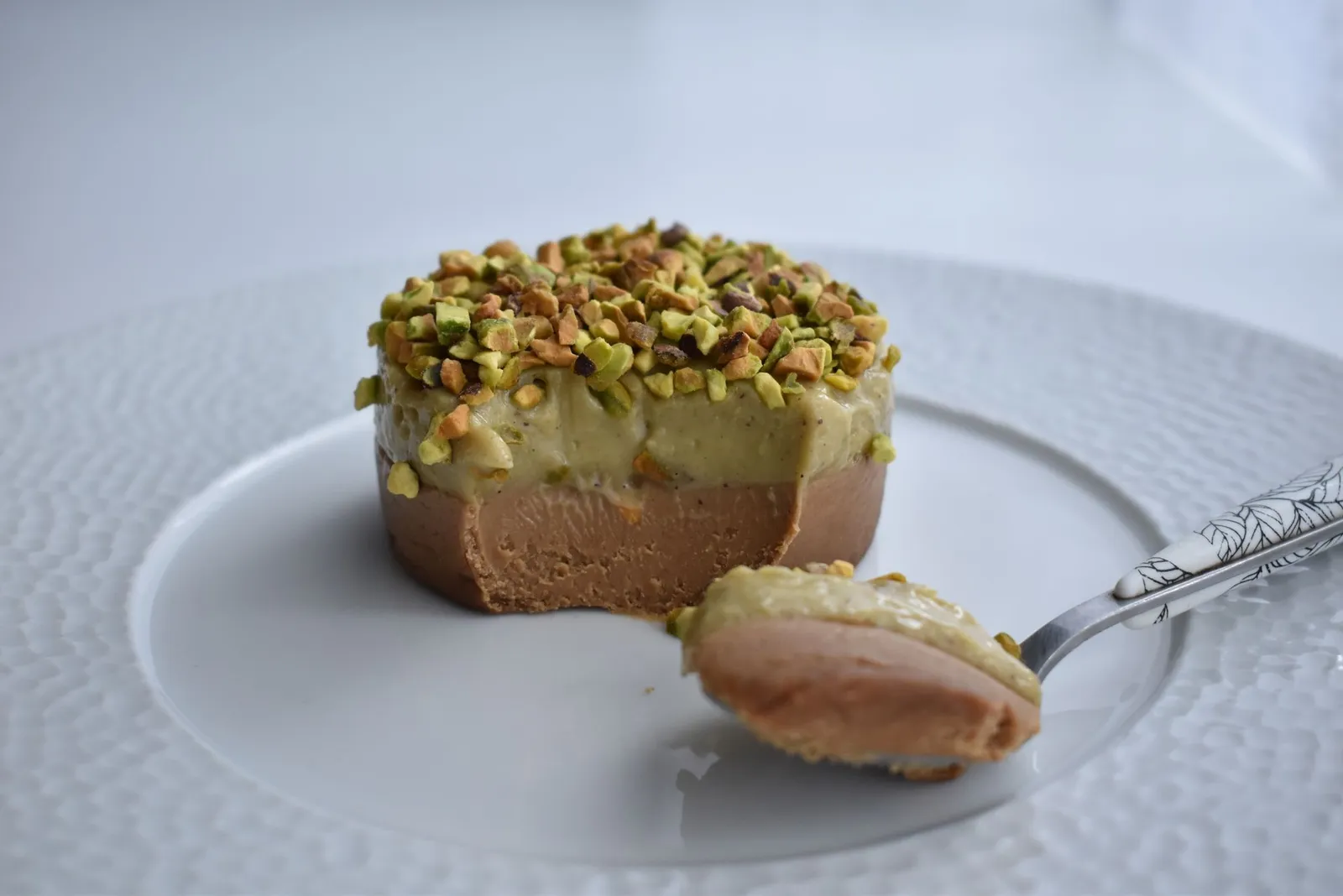
Creams and fillings: the paste provides flavour and body; with chocolate or butter it forms stable masses for pralines, cakes and wafers.
Biscuits and baking: it replaces part of the fat in the dough, so the recipe fat is reduced when paste is added.
Ice cream: it adds richness; the fat in the paste must be included in the mix balance.
Bars and snacks: it acts as a binder with syrup and cereals and is combined with chopped roasted peanuts for crunch.
Savoury applications: sauces, marinades and dressings, where pure paste lets you set the salt and sweetness yourself.
Peanuts as an allergen
Botanically, the peanut is not a nut but a legume, and the regulations list it separately. Under Regulation (EU) No 1169/2011, peanuts and products thereof are among the substances causing allergies or intolerances and must be emphasised in the list of ingredients, usually in bold. This applies even when peanut paste is only a minor ingredient of a filling or cream.
Because allergic reactions can be severe, handling peanuts on site calls for an allergen management plan: separate storage, production sequencing, cleaning of equipment between batches and an assessment of cross-contact risk. A “may contain peanuts” statement is voluntary information and should be based on an assessment of the actual risk, not applied routinely to every product.
Storage and quality control
Keep the paste closed in a cool, dark place, away from heat sources and strong odours. Oxygen and heat accelerate rancidity, which develops faster in paste than in whole kernels because a large surface area is exposed to air. Close opened containers tightly and use them within a reasonable time; the best-before date is stated on the label.
At goods-in inspection, check aroma and flavour (fresh, roasted, with no rancid or burnt notes), colour compared with previous deliveries, and fineness. Peanuts are a raw material monitored for contaminants such as aflatoxins, for which EU legislation sets maximum levels, so it is reasonable to ask your supplier for a specification and details of their checks. You will find the raw material in other forms, from raw kernels to roasted, in the Peanuts category.
We only use necessary cookies that the shop needs to work. Cookie policy
We only use necessary cookies and browser storage, without which the shop does not work: your basket, login, the chosen language and remembering this notice. We do not use analytics or marketing cookies. Cookie policy