Pistachios in pastry: paste, chopped or whole kernels, and how to judge quality
Which pistachio form for which application, what colour says about quality and origin, and what to look for in pistachio paste.
Pistachio has become one of the most sought-after flavours in pastry, from ice cream and cream-filled croissants to cakes, macarons and pralines. At the same time it is one of the most expensive raw materials in the workshop, so any mistake in choosing the form or quality quickly shows, both in the look of the product and in the costing.
In this guide we explain when to use paste, when chopped pistachios and when whole kernels, and how colour, flavour and origin help you assess the quality of the raw material.
Pistachio paste: flavour within the mass
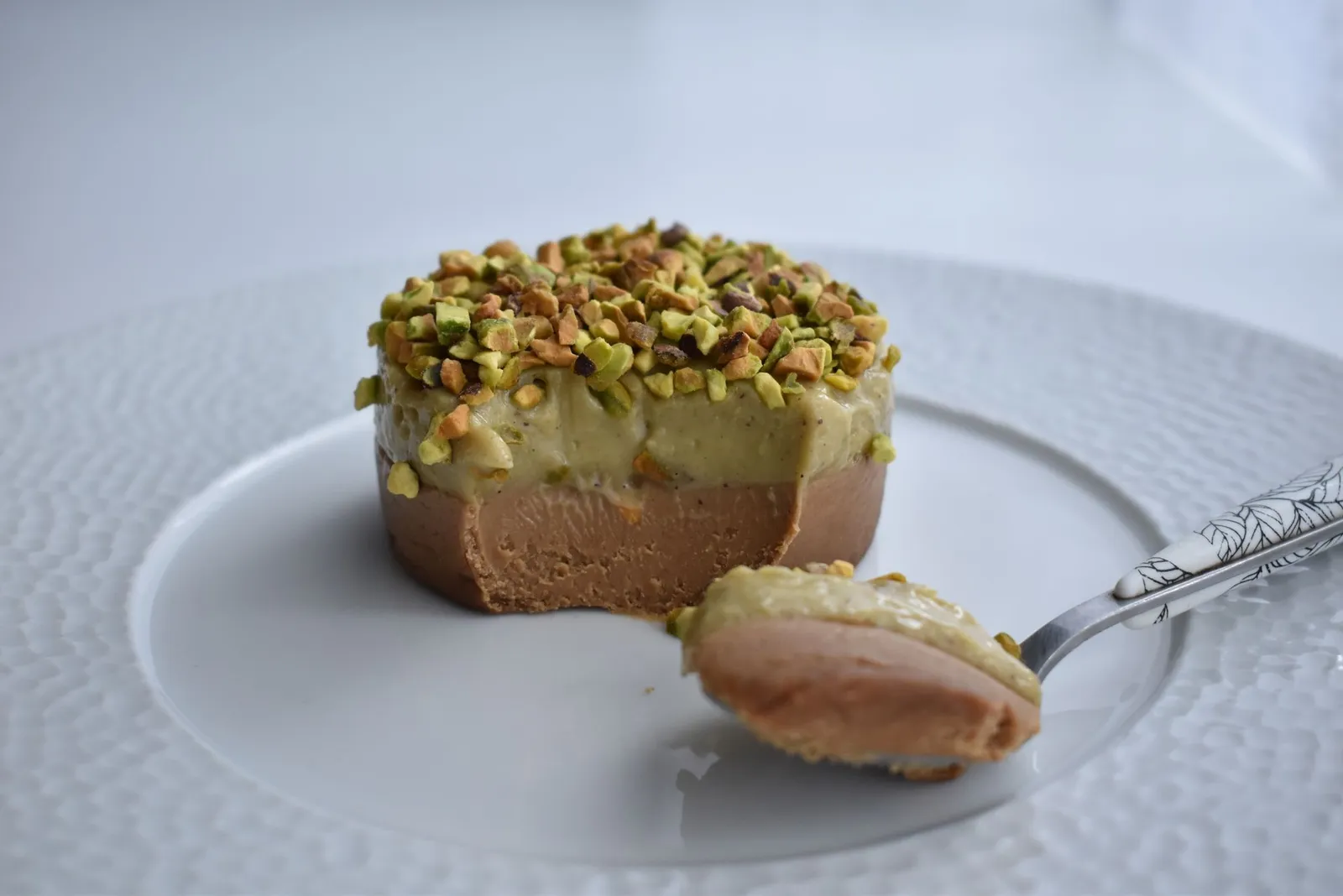
Paste made from 100 % pistachios carries the flavour in creams, ganache, ice cream, fillings and mousse bases. It is made by finely grinding the kernels into a smooth mass, and its colour and flavour depend solely on the raw material and its processing. Pure pistachio paste is naturally olive to deeper green, sometimes with a slight brown tinge if the kernels were roasted before grinding.
The market also offers pastes and creams in a vivid, bright green. That colour often comes from added colourings or from blending with other ingredients, which shows up in the ingredient list. For professional use it pays to work with pure paste and adjust the colour of the finished product as needed: that way you know exactly how much pistachio goes into the recipe, and the label stays simple.
Dosage depends on the application and the intensity you want, so it is best determined by trial. The fat in the paste must be included in the recipe balance, particularly for ice cream and ganache, where excess fat changes the texture. Like other pastes, pistachio paste may separate on standing and should be stirred thoroughly before use.
Chopped pistachios: colour and texture on the surface
Chopped pistachios are first and foremost decoration and a source of texture. The granulation is chosen according to the size of the product and what the pistachio needs to do on it:
0–2 mm: a fine coating for cake edges, macarons and pralines, and for rolling truffles and roulades; it gives an even green surface.
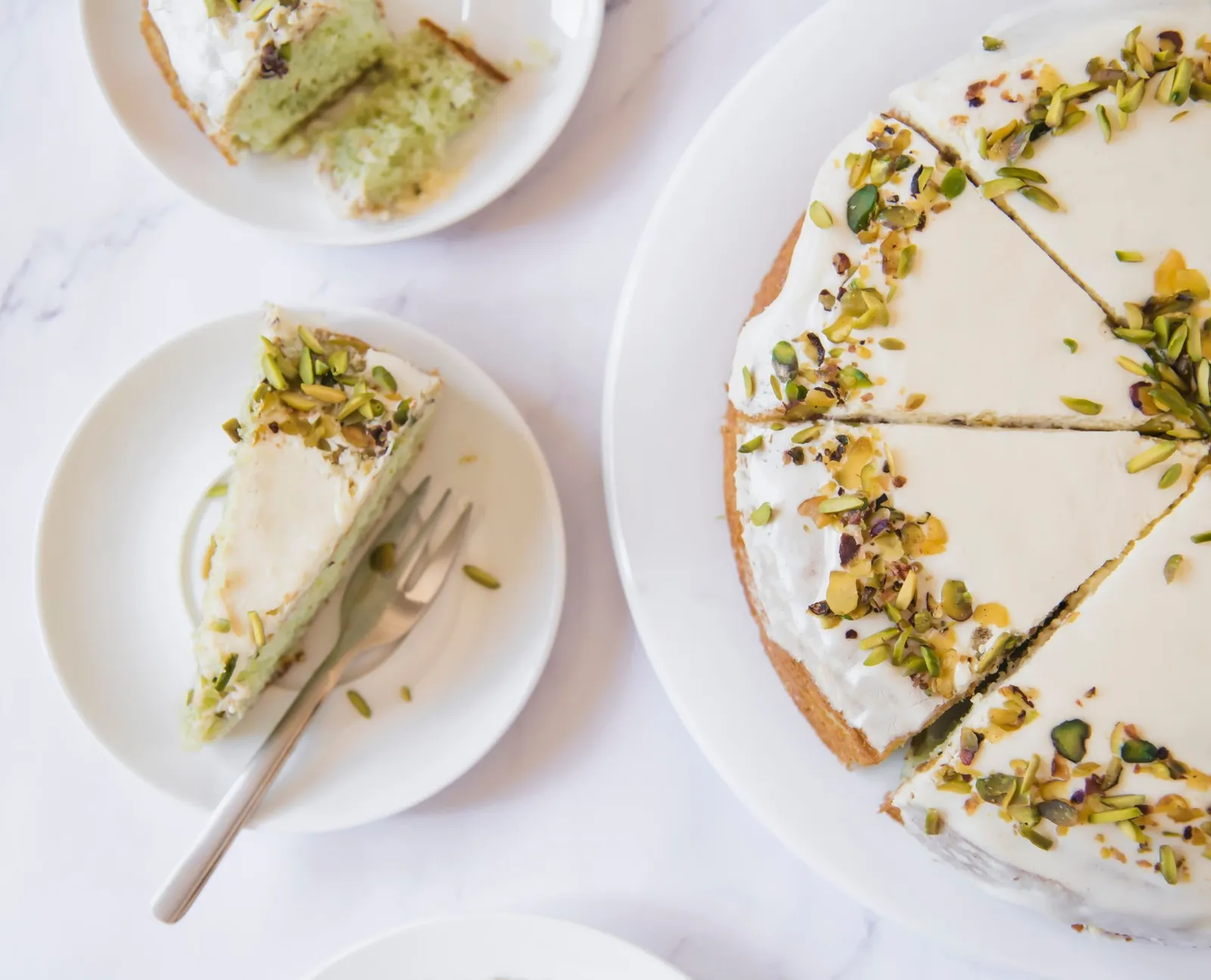
2–4 mm: an all-round granulation for topping cakes, croissants and ice cream and for folding into creams and chocolate masses when you want a noticeable bite.
4–6 mm: visible pieces for decorating dessert glasses, cannoli and tarts, where the pistachio must be recognisable at first glance.
The finer the granulation, the larger the surface exposed to air and the faster pistachios lose freshness, so order chopped pistachios in quantities you will use within a reasonable time and keep them tightly closed.
A finer granulation gives an even green surface, a coarser one visible pieces
Whole kernels: when the pistachio must be seen
Whole unsalted kernels are used in nougat, biscotti, terrines, chocolate bars and as a finishing decoration. Unroasted kernels give the most freedom: you can use them as they are, roast them briefly for a more pronounced aroma, or chop them to exactly the size you need. When roasting pistachios, be careful with temperature and time: the green quickly turns olive and then brown, so roast them for less time and more gently than hazelnuts or almonds.
For decoration with the strongest green, peeled pistachios are also used, with the purplish-brown skin removed by blanching. These kernels are strikingly green and very eye-catching on white icing or chocolate, but they are more expensive and more delicate, so they are used sparingly, where colour is the product’s main impression.
With pistachios you pay for colour: the greener and more even the kernel, the higher the price, and the more it is worth on the plate.
How to recognise quality
Colour is the first thing a pastry chef looks at, and it depends on variety, origin and harvest time. Earlier-harvested pistachios and certain growing areas give a more intensely green kernel; a well-known example is the Sicilian pistachio from around Bronte, prized for its colour and aroma but also considerably more expensive. Much of the world’s supply comes from the United States, Iran and Turkey, and quality within each origin varies with grade and processing. Origin is therefore useful information, but it is no substitute for inspecting the raw material itself.
When taking delivery of pistachios, check:
colour uniformity, with no large share of yellow, brown or dark kernels;
the skin: the purplish-brown skin on the kernel is natural, but how much of it there is affects the colour of paste and toppings;
aroma and flavour: fresh, slightly sweet and resinous, with no rancid or stale notes;
cleanliness: no shell fragments or foreign bodies;
the supplier’s specification: like peanuts, pistachios are monitored for aflatoxins, for which EU legislation sets maximum levels.
Pistachios are tree nuts and an allergen that must be emphasised in the list of ingredients under Regulation (EU) No 1169/2011.
Storage
Store pistachios in a cool, dry, dark place, in well-sealed packaging and away from strong odours. Light affects not only rancidity but also colour: kernels exposed to light gradually fade and lose their green hue. Close opened paste and chopped pistachios immediately after use; the best-before date is stated on the label.
Given the cost of the raw material, waste is worth watching too: apply chopped pistachios in a way that lets you collect and reuse whatever falls off the product, and take paste out with clean, dry utensils so that no moisture gets into the container.
We only use necessary cookies that the shop needs to work. Cookie policy
We only use necessary cookies and browser storage, without which the shop does not work: your basket, login, the chosen language and remembering this notice. We do not use analytics or marketing cookies. Cookie policy