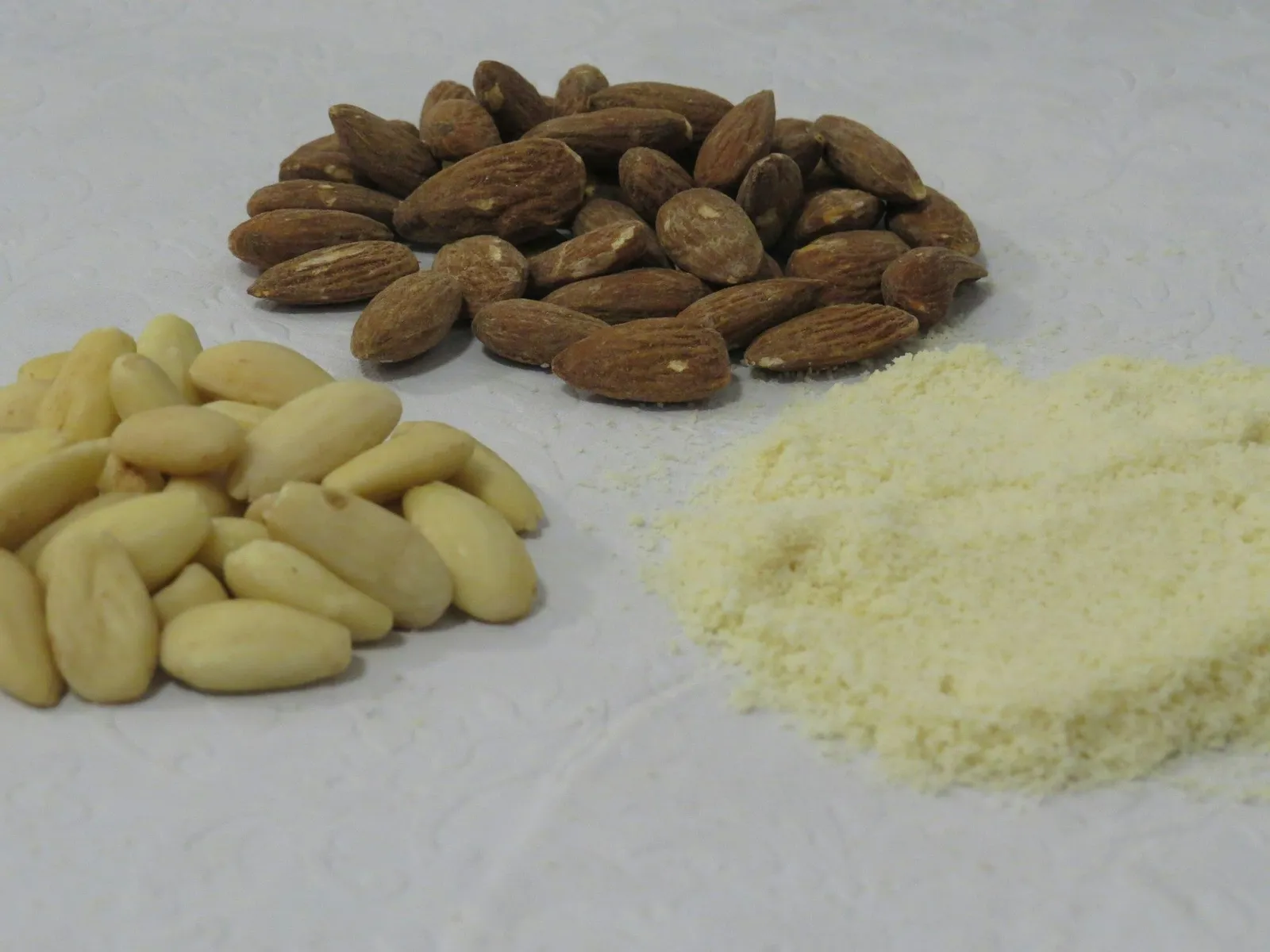
Natural and blanched almonds are the same nut; the only difference is the thin brown skin (the seed coat), which stays on the kernel in natural almonds and is removed in blanched ones. That skin accounts for only a few per cent of the weight, yet it largely determines the colour of the finished product, its flavour, the texture of ground almond and how the almond behaves in a cream, a dough or the oven.
Below we compare the two forms the way a food technologist or pastry chef sees them: what happens during blanching, where each form is the better choice and which mistakes to avoid.
Blanching is a brief heat treatment with hot water or steam. The kernel is heated just enough for the skin to absorb moisture and loosen, after which it is removed mechanically, usually between rubber rollers. The almonds are then dried back down to a low moisture content so that they remain stable in storage and further processing.
The heat treatment must be short: blanching is not boiling and must not soften the kernel. A well-blanched almond is an even creamy white, free of skin residues, firm and crisp. Traces of brown skin in the creases of the kernel, yellowish or greyish tones and a rubbery texture indicate that the process ran too long or that drying was insufficient.
Classic marzipan is made from blanched almonds and sugar. A light colour, a clean almond flavour and a smooth, pliable mass that can be modelled and coloured are not achievable with natural almonds: the skin would add a greyish colour, specks and astringency. If you make your own marzipan mass, grind the almonds gradually and keep them cool, because overheating in the mill releases oil and the mass turns greasy and crumbly.
Macarons call for very finely ground blanched almond, sifted together with icing sugar. A smooth, glossy surface and an even shell colour depend on exactly that: the skin of natural almonds would leave visible specks and coarser particles a rough surface. The most common mistakes are almond flour that is too moist, which hinders the formation of the “feet”, and grinding until the almonds turn oily, after which the batter loses its structure. The same applies to dacquoise, joconde and other sponges that need a light, delicate crumb.
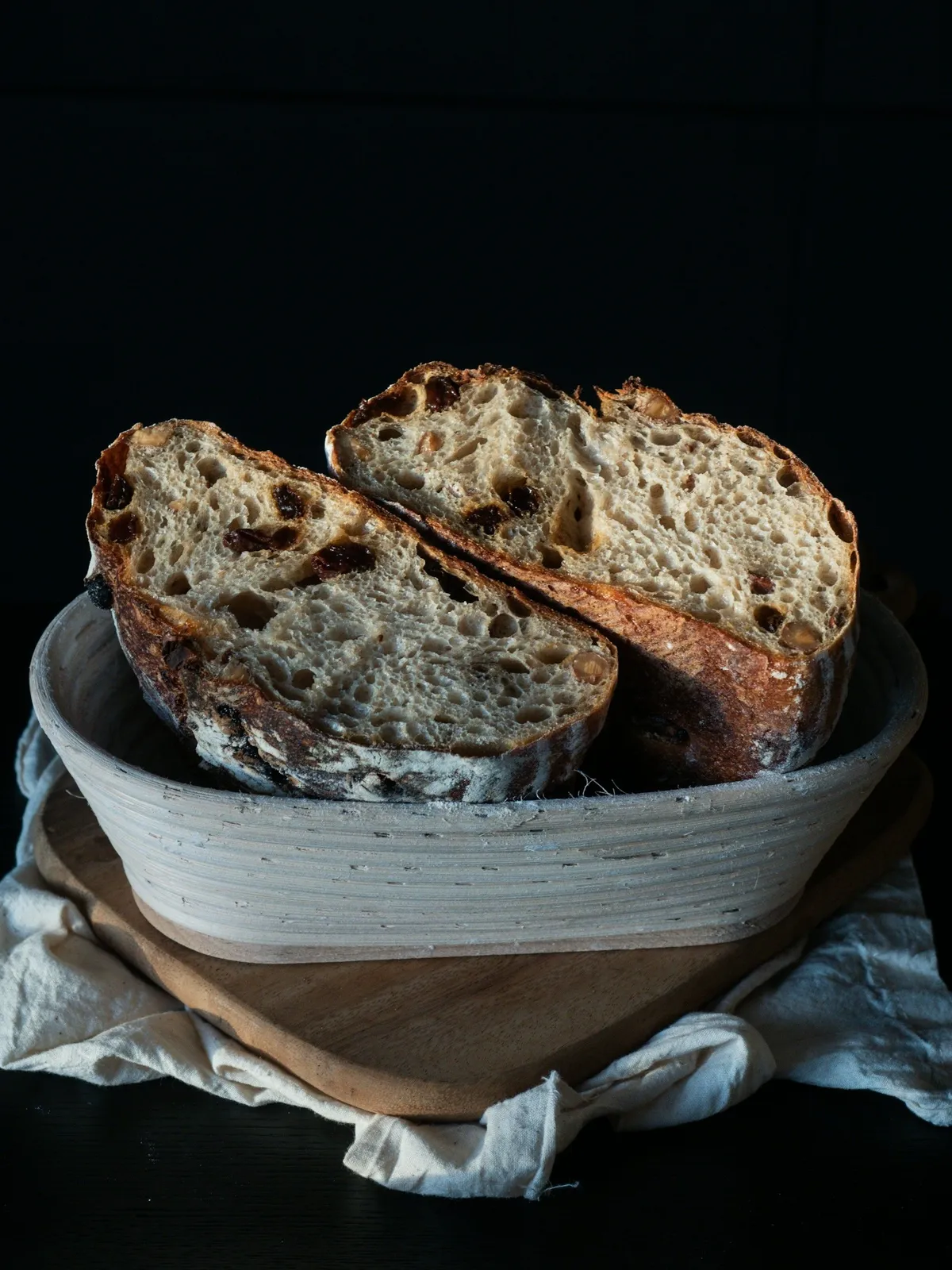
Natural almonds are the better choice where character and a rustic look are wanted. In baking they are used for topping breads and rolls, in multigrain and fruit breads, and in biscotti and cantuccini, where the whole nut with its brown skin gives a distinctive cross-section. In dark doughs, Linzer pastry, gingerbread and chocolate cakes the skin does not affect the colour and contributes a fuller flavour.
Natural almonds also suit pralines and bars with whole roasted almonds, where the contrast between brown skin and chocolate looks natural. In granola, muesli and nut mixes, consumers perceive natural almonds as less processed, which is a common reason for choosing them in such ranges.
A practical rule: if the finished product is light-coloured, smooth, or the almond is meant to be a neutral base for other flavours (vanilla, fruit, liqueur), choose blanched. If the almond should be visible and carry flavour, and the dough is dark anyway, natural is the logical and usually the more economical choice.
| Application | Recommendation |
|---|
| Marzipan, macarons, light creams | blanched |
| Fine sponges, frangipane | blanched |
| Biscotti, bread toppings, granola | natural |
| Linzer pastry, gingerbread, chocolate cakes | natural |
When ordering for production, it pays to define the form in advance as well: whole kernels, chopped almonds of a given granulation, ground almonds or paste. Reducing the almonds just before use gives the freshest flavour but takes equipment and time; ready-chopped almonds save labour but should be used up sooner and kept tightly closed in a cool place. If you roast almonds yourself, watch blanched ones more closely than natural ones: without the skin they darken faster and easily take on a bitter, burnt note.
The same applies to both forms: almonds are tree nuts and an allergen that must be emphasised in the list of ingredients under Regulation (EU) No 1169/2011. See the full range, including the roasted form, in the Almonds category.